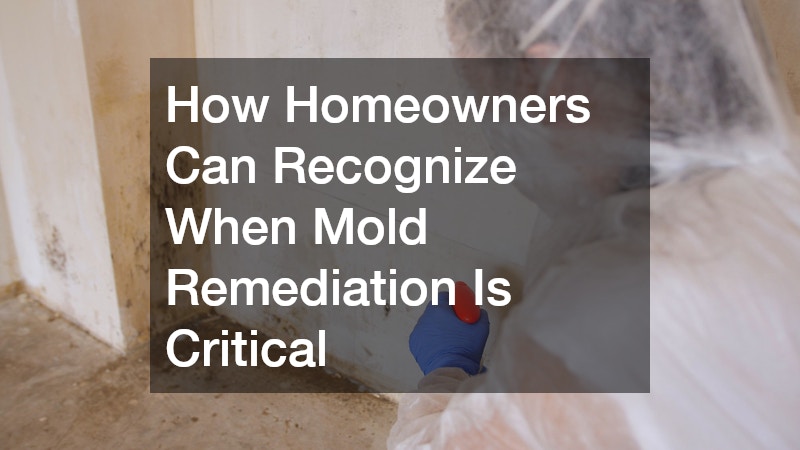

Mold can develop quietly in places homeowners rarely inspect, including behind walls, beneath flooring, inside HVAC systems, and around areas affected by moisture. While a small amount of surface growth may sometimes be addressed before it spreads, larger or hidden problems can create extensive property damage and affect indoor conditions throughout a home.
Recognizing the warning signs early can help homeowners determine when professional attention is necessary. Persistent moisture, recurring growth, strong odors, and widespread contamination may all indicate that the problem has progressed beyond a simple cleaning task. Understanding these signs can make it easier to protect the home and address the underlying source of moisture before the damage becomes more extensive.
Persistent Musty Odors and Visible Mold Growth
One of the most recognizable signs of a serious mold problem is a persistent musty odor. Mold can release microbial volatile organic compounds that create an earthy or damp smell, particularly in enclosed spaces with limited ventilation. If the odor remains after cleaning and airing out the area, it may suggest hidden growth behind drywall, under carpets, inside cabinets, or within another concealed part of the home.
Visible growth is another important warning sign, especially when it covers a large area or continues returning after cleaning. Mold can appear in many colors and textures, including black, green, white, gray, or orange patches. The color alone does not determine the severity of the problem, but recurring or expanding growth indicates that moisture conditions are continuing to support contamination.
At this stage, mold remediation may be critical because simply removing visible growth does not necessarily address contamination in hidden materials or the source of the moisture. Professional evaluation can help determine the extent of the problem and identify whether damaged materials need to be removed, cleaned, or restored.
Water Damage, Moisture Problems, and Recurring Contamination
Past or ongoing water damage is one of the strongest indicators that homeowners should closely monitor for mold. Roof leaks, burst pipes, appliance failures, foundation moisture, and flooding can introduce large amounts of water into building materials. Drywall, insulation, carpeting, wood, and other porous materials may retain moisture long after the original incident appears to be resolved.
Stains, peeling paint, warped flooring, bubbling walls, and soft drywall can all indicate moisture inside the structure. Even if no mold is immediately visible, these signs should not be ignored. Hidden dampness can create suitable conditions for growth in wall cavities, beneath finished floors, and inside other inaccessible spaces.
High indoor humidity can create similar concerns. Bathrooms, basements, crawl spaces, laundry rooms, and kitchens may experience repeated moisture exposure, particularly when ventilation is inadequate. Condensation on windows, pipes, or walls can also signal that humidity levels are contributing to an environment where mold can develop.
Recurring contamination after repeated cleaning is particularly concerning. When the same growth returns in the same location, the visible material is often only part of the issue. Mold remediation may be necessary to address affected materials, locate hidden contamination, and correct the moisture conditions allowing the problem to continue.
Extensive Damage and Signs of a Larger Hidden Problem
A mold issue can become more urgent when it affects a large portion of the home or spreads beyond the original location. What begins as a small leak beneath a sink, for example, may eventually affect cabinets, subflooring, adjacent walls, and nearby rooms. The longer moisture remains present, the greater the possibility that damage will extend into structural materials.
Homeowners should be especially cautious after major water events. Flooding, significant roof damage, sewage backups, and large plumbing failures can affect multiple building materials at once. Even after standing water is removed, moisture may remain in framing, insulation, flooring, and wall systems. Thorough drying and inspection are essential because concealed moisture can continue causing problems after the visible damage has been repaired.
Professional mold remediation becomes particularly important when the source, extent, or location of contamination cannot be clearly identified. A comprehensive approach can focus on containing affected areas, removing or cleaning damaged materials when appropriate, and correcting moisture problems that could lead to future growth. Addressing both the contamination and its cause is essential to preventing the same issue from returning.

Mold problems do not always begin with an obvious warning, which is why homeowners should take persistent odors, water damage, and recurring growth seriously. Acting early may limit the amount of damage and reduce the likelihood of contamination spreading into additional areas of the home.