

Modernizing residential infrastructure requires shifting from a reactive mindset of replacing broken equipment to a proactive strategy of holistic optimization. Homeowners often underestimate the cost of aging mechanical, electrical, and fluid transport systems. Over ten to fifteen years, these networks degrade, operating at fractions of their original efficiencies. This deterioration increases utility bills, causes uneven thermal comfort, premature equipment failures, and a larger environmental footprint. Addressing these energy drains requires a rigorous audit of the property’s core mechanics.
Consider these options for modernizing your home’s infrastructure. By auditing climate control mechanisms, air distribution networks, fluid transport circuits, electrical grids, and fuel delivery systems, homeowners can implement improvements that minimize operational costs. Upgrading these components transforms a property into an intelligently managed, efficient environment. The following sections detail methodologies and upgrades to achieve peak residential performance, ensuring every dollar invested yields comfort and utility conservation.
Upgrading Thermal Regulation

The foundational step in any whole-home modernization project begins with an evaluation of seasonal energy efficiency metrics and the replacement of outdated compressor technology. Understanding the transition from 10 to 13 SEER (Seasonal Energy Efficiency Ratio) equipment to modern 18+ SEER2 variable-speed inverter heat pumps is crucial for minimizing long-term utility consumption. Variable-speed compressors do not operate on a simple on-and-off cycle; instead, they modulate their output in precise increments, continuously matching the exact thermal load of the living space. This modulation eliminates the massive energy spikes associated with startup surges and provides superior dehumidification during warmer months.
When evaluating these complex upgrades, property owners must rely on advanced diagnostics rather than simple square-footage guesswork. Thorough HVAC services are essential for performing accurate ACCA Manual J (load calculation) and Manual S (equipment selection) procedures. These calculations consider insulation R-values, window solar heat gain coefficients, and the specific directional orientation of the property. Properly sizing equipment ensures the compressor runs long enough to extract humidity without short-cycling. Integrating multi-zone damper setups allows for independent climate control across different living areas, eliminating the wasteful conditioning of unoccupied spaces.
Biannual preventative maintenance is crucial for preventing phantom energy draws and extending the lifespan of thermal equipment. Even advanced variable-speed systems lose efficiency if neglected. Moving parts require lubrication, and heat exchange surfaces must remain clean. Specialized heating services help calibrate combustion efficiency, clean blower motor impellers, and scrub outdoor condensing coils. Routine diagnostics with thermal imaging cameras and static pressure differential testing identify issues before they escalate.
- Calculate the long-term cost differential between keeping an outdated single-stage compressor running versus financing a modern, variable-speed inverter heat pump with an HSPF2 rating of 9.0 or higher.
- Demand comprehensive load calculations prior to any major equipment swap to prevent the chronic short-cycling associated with oversized machinery.
- Implement a rigorous schedule for chemically cleaning outdoor condenser coils, as organic debris and mineral scale can reduce thermal transfer efficiency by up to thirty percent.
- Utilize thermal imaging diagnostics during seasonal transitions to pinpoint exactly where mechanical equipment is losing energy to unconditioned spaces.
- Upgrade to smart, communicating thermostats that integrate directly with variable-speed air handlers to optimize blower motor speeds based on real-time humidity levels.
Restoring Air Distribution and Core Combustion
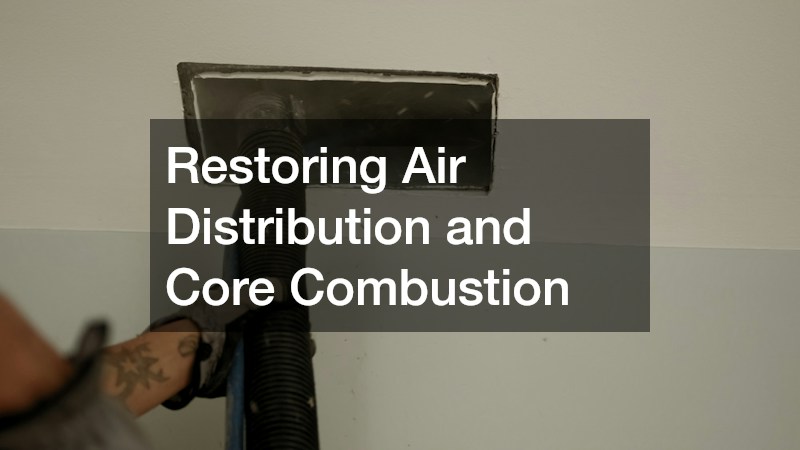
Air distribution networks are often neglected in property infrastructure, yet they cause significant energy waste. The fluid dynamics of air leakage result in residential forced-air systems losing about twenty-five to forty percent of conditioned output into unconditioned spaces. This loss forces equipment to run longer, consuming more components and utility budgets. Sealing concealed sheet metal seams is crucial in home modernization. Professional duct repair uses fiberglass-reinforced mastic paste and computerized aerosolized sealants to create permanent, airtight barriers.
To ensure optimal performance and longevity, homeowners must understand how to measure and manage static pressure in these distribution networks. Digital manometers measure the resistance against the blower motor. Undersized return drops or supply branches restricted by debris or poor design cause the blower motor to overwork, consume excess electricity, and burn out prematurely. Balancing supply and return static pressure ensures conditioned air reaches the property’s farthest corners without stressing the core machinery.
The internal combustion components of thermal machinery must be strictly calibrated. An annual drop in the Annual Fuel Utilization Efficiency (AFUE) often signals fouling, dirty burners, or exhaust issues. Over time, abrasions and carbon on sensors can prevent complete combustion, leading to soot and wasted energy. When warning signs like cycling delay switches or carbon-coated flame rectifiers appear, furnace repair becomes necessary to clean and recalibrate burners. A well-calibrated burner ensures maximum thermal conversion, extracting every possible unit of heat from the fuel.
- Abandon standard adhesive tapes in favor of fiberglass-reinforced mastic paste when sealing exposed sheet metal joints in unconditioned areas.
- Consider aerosolized sealant technology to eliminate microscopic leaks in inaccessible distribution branches hidden behind drywall.
- Monitor static pressure with digital manometers to ensure that upgraded, high-efficiency pleated air filters are not suffocating the main blower motor.
- Inspect multi-stage burner assemblies annually to ensure the stoichiometric ratio of oxygen to fuel is perfectly balanced for a clean, blue flame.
- Have secondary heat exchangers rigorously inspected for micro-cracks, as failures in these components drastically reduce AFUE ratings and pose severe safety hazards.
Advancing Domestic Hydronic Efficiency
Maintaining these advanced hydronic systems requires specific, chemistry-focused interventions. The accumulation of calcium and magnesium scale on internal heat-transfer plates acts as an insulator, forcing the equipment to burn hotter and longer to reach the desired output temperature. Routine water heater service is necessary to flush these mineral deposits, test the integrity of temperature-pressure relief (TPR) valves, and replace sacrificial anode rods before internal corrosion compromises the tank structure. Installing descaling filtration media at the main intake can proactively prevent this mineral scale from reaching the heating elements, preserving the unit’s ultra-high efficiency ratings for decades.
The vast network of supply lines must be optimized for minimal resistance and maximum thermal retention. High water pressure can damage valves and cause excess waste. Licensed plumbing contractors can conduct pressure audits and install pressure regulating valves to maintain optimal PSI. Insulating unconditioned hot water lines with closed-cell polyethylene foam reduces thermal loss, ensuring hot water reaches the tap faster and reduces the load on the heating unit.
- Compare the lifecycle operating costs of standard atmospheric storage tanks against the remarkable energy savings provided by 4.0 UEF hybrid heat pump units.
- Install physical or electronic descaling systems on the main fluid intake line to protect internal heat exchangers from the insulating effects of calcium carbonate buildup.
- Test and replace temperature-pressure relief valves annually to ensure critical safety mechanisms are functioning without weeping or seizing.
- Wrap all accessible hot water supply lines in unconditioned spaces with heavy-duty, closed-cell polyethylene foam insulation to combat ambient heat loss.
- Integrate on-demand recirculating loops governed by smart aquastats to eliminate the daily waste of running taps while waiting for heated fluid to arrive.
Scaling Electrical Grid Capacity and Backup Power

As properties transition toward whole-home electrification, incorporating heat pumps, induction ranges, and high-capacity electric vehicle chargers, the underlying electrical infrastructure must be scaled to handle unprecedented current loads. The standard 100-amp fuse panels of the past are entirely insufficient for modern energy demands. Upgrading to a smart 200-amp main circuit center is a foundational necessity for safely distributing high-draw loads across the property. These modernized panels feature highly responsive circuit breakers and advanced arc-fault circuit interrupters (AFCIs) that detect dangerous wiring anomalies before they spark catastrophic fires.
Because of the extreme dangers associated with high-voltage load balancing, engaging qualified local electricians is critical when performing code-compliant load calculations and establishing dedicated circuits for heavy-draw appliances. Upgrading the main service entrance also opens the door to installing intelligent electrical panels. Systems manufactured by companies like Span or Schneider Electric provide real-time, circuit-level energy monitoring via mobile applications. This technology allows property owners to analyze granular consumption data and schedule high-draw activities—such as automated vehicle charging or electric water heating—during off-peak rate tiers, aggressively minimizing monthly utility expenditures.
Simultaneously, protecting this modernized infrastructure from grid instability is a paramount concern for long-term property resilience. Extended blackouts can lead to flooded basements, spoiled food, and freezing pipes. A strategic generator installation safeguards essential internal systems, ensuring that well pumps, refrigeration units, medical devices, and sump pumps remain fully operational during severe weather events. By pairing standby power sources with automatic transfer switches and smart load-shedding modules, property owners can prevent their backup systems from being unnecessarily oversized. Load-shedding technology intelligently cycles high-draw appliances on and off during an outage, reducing overall standby fuel consumption and vastly lowering initial equipment expenses.
- Calculate the total amperage requirements of planned electrification upgrades to determine if a full 200-amp or 400-amp main service panel replacement is necessary.
- Upgrade obsolete, standard breakers to modern combination arc-fault and ground-fault interrupters to maximize the physical safety of the property’s wiring network.
- Invest in smart electrical panels that provide granular, real-time consumption analytics, allowing for precise management of daily and monthly power usage.
- Incorporate automatic transfer switches alongside any standby power solution to ensure seamless transitions during sudden grid failures without manual intervention.
- Implement load-shedding modules to intelligently prioritize critical circuits during an outage, allowing smaller, more efficient standby units to power the entire property.
Refining Supply Infrastructure and Fuel Optimization

For properties that continue to utilize natural gas or liquid propane for high-heat applications, maintaining the absolute integrity of the delivery infrastructure is essential for both safety and combustion efficiency. The vast majority of legacy properties utilize outdated threaded black iron pipes or early-generation corrugated stainless steel tubing (CSST). Over time, micro-vibrations, foundation settling, and chemical degradation can cause minute leaks at joints and junctions. These undetectable leaks not only bleed purchased fuel into the atmosphere but also present a catastrophic safety hazard. Utilizing electronic sniffer tests and hydrostatic pressure drop diagnostics allows for the exact pinpointing of supply degradation.
When supply line vulnerabilities are identified, professional gas line repair involves meticulous repiping protocols, replacing obsolete manual gate valves with modern, heavy-duty quarter-turn ball valves for immediate emergency shut-off capabilities. Upgrading the physical delivery lines ensures that appliances receive adequate fuel volume without dangerous pressure drops. Additionally, rigorous carbon monoxide mitigation strategies and exhaust draft testing must be performed on all natural-draft fuel-burning appliances to confirm that combustion byproducts are efficiently safely expelled from the property envelope, preventing toxic back-drafting during negative pressure events.
To maximize the efficiency of multi-fuel or advanced high-efficiency equipment, controlling the exact density and pressure of the delivered fuel is highly beneficial. In specific residential and light-commercial applications, implementing a gas blending system—such as propane-air peak shaving setups or synthetic natural gas mixers—can regulate fuel density and heating values for optimal appliance combustion. By utilizing electronic dual-stage regulators and precise proportioning controls, property owners can tune the fuel-to-air stoichiometry with microscopic accuracy. This prevents equipment from burning too rich, which wastes expensive fuel and creates heavy soot, or burning too lean, which can permanently damage heat exchangers through excessive localized temperatures.
- Conduct hydrostatic pressure drop tests on all aging fuel delivery branches to confirm total system integrity and locate hidden micro-leaks.
- Replace outdated, difficult-to-turn gate valves with highly reliable, quarter-turn brass ball valves at every major appliance connection point.
- Verify the proper bonding and grounding of all corrugated stainless steel tubing to prevent catastrophic punctures caused by indirect lightning strikes or static discharge.
- Utilize electronic dual-stage regulators to ensure the fuel delivery pressure remains absolutely consistent, regardless of the demands placed by other appliances on the network.
- Perform comprehensive draft testing on the exhaust flues of all combustion appliances to guarantee that toxic byproducts are venting properly under all atmospheric conditions.
Executing a comprehensive infrastructure modernization requires a disciplined, phased approach rather than a chaotic overhaul. The most financially sound strategy begins with securing the property envelope—sealing drafts and upgrading insulation—to reduce the thermal load. Once optimized, scale the electrical grid capacity to support modern machinery. Only after sealing the envelope and securing the power grid should mechanical replacements occur. This ensures new machinery is sized for the optimized environment, avoiding the mistake of oversized equipment.
To maximize return on investment, meticulous incentive stacking is essential. Property owners must research and combine local utility rebates, state energy program grants, and federal tax credits to offset the expense of high-efficiency machinery. The most critical step is scheduling a certified baseline home energy assessment. Using blower door tests and combustion analyzer inspections establishes a data-driven starting point, allowing property owners to track the impact of their modernization efforts over the decades.